Introduction
Environmental Education refers to organized efforts to teach about how natural environments function and, particularly, how human beings can manage their behavior and ecosystems in order to live sustainably. The term is often used to imply education within the school system, from primary to post-secondary. However, it is sometimes used more broadly to include all efforts to educate the public and other audiences, including print materials, websites, media campaigns, etc. Related disciplines include outdoor education and experiential education. Environmental education is a learning process that increases people?s knowledge and awareness about the environment and associated challenges, develops the necessary skills and expertise to address the challenges, and fosters attitudes, motivations, and commitments to make informed decisions and take responsible action (UNESCO, Tbilisi Declaration, 1978).1
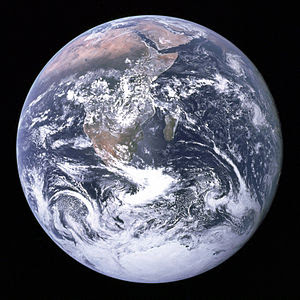 Environment is considered as a composite term for the condition in which an organism lives including both biotic and abiotic substances. It was during 1950s and 1960s that people all over the world became more concerned about the quality of their environment. Environmental tragedies like the case of mercury poisoning in Minamata (Japan), severe smog in London in 1952 and massive oil spillages caused by the Torrey canyon accident reinforced the people?s belief the sense that quality of air, water and other environmental resources was being seriously degraded.
These devastating incidents swept a wave of concern across the developed countries in the sixties and the developing countries including India in the late seventies. A large number of things and services provided by the nature to the life on earth are known as natural resources. But the fast developments in science and technology which resulted in substantial?s benefits to mankind have also contributed to the degradation of the environment more severely in past several decades. Such environmental change may jeopardize the very existence of life on the planet earth. This has caught the attention of scientists, policy makers, academicians, social scientists and the common citizens to raise their voice against such injustice done to the environment.
Environmental protection is now being openly discussed at various national and international forums. Talks are progressing in the direction of sustainable development not simply the development. The cause of the sustainable development can be achieved only by people?s participation at the grass root level. The rapidity with which our environment is adversely changing is alarming and as one of the steps to halt and to reverse this trend our future generations should be made aware of the environmental problems and its enormity.
Environmental Crisis and Islam
?When the earth is shaken with a (violent) shaking,
And the earth reveals what burdens her,
And man says: What has befallen her?
On that day she shall tell her story?.? (Qur?an 99:1-4)
If traditional Islamic values are to be reasserted in the process of developing the human-built environment, educational efforts must be directed at the politician as decision maker, at the public as clients, and at the professional as a technician. There is also a need to document Islamic cultural heritage; to understand the evolution of architectural forms in response to changing social conditions; to assess current relevance of past technical solutions; and to examine how different architectural solutions have responded to climatic requirements. Education of professionals, politicians, and the public should be based on the values abstracted from this systematic analysis of Islamic achievements as a means of reaffirming Islam?s ability to treat man with dignity.2
Despite the apocalyptic premise of Samuel Huntington?s book, The Clash of Civilizations (which prophesies an inevitable war between the armies of the God and the armies of Allah), Islam and Christianity have much in common. In their view of the natural world, both the Bible and the Qur?an share many of the same stories,heroes and ethical concepts. But there are some differences. The Qur?an might even be said to be the ?greener? of the two holy books. The world ?Earth? (ard) appears no less than 485 times in the holy book of the Qur?an. Shari?a, the word for Islamic Law, literally means ?source of water.? The Prophet instructed the faithful that any Muslim who plants a crop that feeds another person, animal or bird, will receive a reward in paradise.Cutting down trees is seen as an abomination. How important is the planting of trees? In the words of the Prophet: ?When doomsday comes, if someone has a palm shoot in his hands, he should plant it.? 3
An Islamic Approach towards Environmental Education
A distinctly Islamic approach to environmental education is pinpointed as a result of identifying, listing, sorting, and grouping the verses in the Qura?n (the holy book of Islam and Moslems) related to environmental education such as learning, exercising, and mind and knowledge development, and finding connections and relationships between groups according to mutual meanings. The approach is formulated in a tripod-type structure.4 Islam, as a way of life expects human beings to conserve the environment for several reasons. Its concern for the environment appears in many Qur?anic verses.
The Islamic attitude of duty towards the environment is not merely derived from the fact that God is its creator. There are other reasons as well. One is that humans act as the agents of God on earth. This agency is not blind and mechanical but is creative in its own way and moreover it must be fulfilled by operating according to God?s instructions. Another reason why, in Islam, humans are expected to protect the environment is that no other creature is able to perform this task. Humans are the only beings that God has ?entrusted? with the responsibility of looking after the earth. This trusteeship is seen by Islam to be so onerous and burdensome that no other creature could ?accept? it.. It is impermissible in Islam to abuse one?s rights as khalifa (agents or trustees), because the notion of acting in ?good faith? underpins Islamic law. The planet was inherited by all humankind and ?all its posterity from generation to generation. Each generation is only the trustee. In other contexts, the concept of khalifa refers to the fact that waves of humanity will continuously succeed each other and inherit planet earth.5
Islam and the Environment
One big goal of Islam is to make life easy for humans and to halt damage done to nature. The Islamic attitude toward nature and the environment is far-reaching. This is demonstrated by a host of Islamic rules and values toward the environment and life as they relate to God?s representatives (Khilafa). Islam in general is built upon an ethical philosophy, with ethics being its heart and soul. According to the Qur?anic verses, humans are responsible for and have a duty toward nature and toward the world as a whole. And above all, man is responsible before his creator (God). Humans do not have an absolute license to do whatever they want and whatever they can to benefit themselves. Rather, they have to look after and take care of their environment for themselves and for future generations (Al-Masri, 1992).
For these reasons, the environment may be regarded as a wide and open field for testing humans and their obedience to God. The environment is holy and has its role in this world, as it was not created in jest. As humans, we are keepers of all creation, including soil, air, water, animals and trees. The main conclusion from these considerations is that Islam encourages the right ethics and values to benefit the entire universe. This is further clarified the concept of life in the hereafter (life after death).
The verses of the Holy Qur?an remind of the wealth of Islamic wisdom regarding environmental ethics. The Holy Qur?an also points to the unity between humans and other creatures. According to the Islamic rules and values, a bond of friendship, mercy and brotherhood between humans and their environment exists, much like the relationship between mother and baby. No one single creature is without importance in this life, and each creature has a duty to fulfill. It is a must for any human to keep and respect the life of any creature, and he has no right to stop the life of this creature without a reason. The discussion of caring for the environment is an important one from the religious point of view. There are many sides to this topic and all are important. Definition of environment, status of mankind in it, mankind?s relationship with the environment, problems threatening the environment, such as pollution, desertification and species? extinction.
From an Islamic perspective, these all are examples within an all-encompassing frame, as the environment plays host to humans. It should be clean and a host to all living creatures, offering them what they need for their existence. The problem of keeping the environment clean and productive is affecting developing countries more than other parts of the world. ?Environment? in the Arabic language literally translates as ?home of man? or ?house of bees?, ?place of camels? and ?place where the baby lives in his mother?s womb?. It also means the place where one stays and lives. The modern definition of environment encompasses more than what was mentioned above. It consists of everything surrounding us: soil, air, water, etc. No doubt that the earth is our largest environment in the widest sense and that it is not a silent island in a vast universe but an island full of life and activities to support human life for which God created soil, water, air, sunshine and food. Islam dictates that humans must live in harmony with the environment.6
Environmental Literacy Is also a Religious Duty
A religious and Islamic principle holds that ?what is necessary for any religious duty is a must ?. Therefore, environmental literacy is a must in Islamic religion and a crucial and vital activity for all Muslims to engage in. Environmental literacy is the gate leading to a clean and healthy environment. all Muslims must develop environmental literacy in accord with the Holy Qur?an, its commandments, and the Prophets? (pbuh) traditions. Achieving this literacy will surely help protect the environment from damages and promote the right feeling among humans towards their environment. It is a positive thing to have a clean and healthy environment, as this will affect all economical, social, political and agricultural areas. As a result of a healthy environment, it will be easy for countries to offer a healthy lifestyle and enough food and water for all its peoples at all times. This, in turn, will reduce medication and other health care costs. Finally, we can conclude that the big goal of all Qur?an verses and Prophet (pbuh) traditions is to build and maintain a healthy and clean environment free from any source of pollution and misuse. Also, not one Muslim?s faith would be complete unless he/she acted to his/her best knowledge to do good deeds, among them protecting the environment.
The Sanctity of Planting Trees in Islam
The beneficial nature of trees to our ecosystem is now widely known. It may be noted in this regard that the planting of a tree is regarded in the classical Islamic tradition as an act of continuous charity, the most desirable sort of good deeds. The Prophet Muhammad (pbuh), on whom be peace, said that if one plants a tree then whatever is eventually eaten from it whether by humans or animals counts for the planter as a an act of charity. The importance of planting trees as a good deed is highlighted in another tradition which says that if one has on hand a sapling ready to be planted and the Day of Judgment arrives one should go ahead and plant it. This divine notion, which came more than 1400 years ago, reinforces the scientific concept of ?chain of life,? with each species depending on another and together maintaining the balance of life on earth.
A Call for Change
Failing to follow the Quranic injunctions, we have, of course, upset the ecological balance. And it is up to us to set it right again. This will require great effort, and courageous personal change. We need to do our best to restore and preserve the balance in nature; to take up our responsibility as viceroys of God and hence as custodians, stewards, and trustees in whose trust God has placed the resources we enjoy. We need to maintain the ecosystems that harbour the dazzling array of life forms God has created, including animals, birds, insects, and plants. But the required personal changes are sometimes simple and manageable. We can easily reduce, reuse, and recycle waste. We can to a large extent conserve our use of water and other natural resources. We can in some small way reverse the process of deforestation by planting one tree at a time. It is time to pay better attention to the principles set forth in God?s message, including this one: ?Man shall have nothing but what he strives for? (Quran 53:39). We have caused corruption on land and sea, and it is up to us to mend our ways. Our present crisis calls on religious leaders to find faith-based messages that will inspire the faithful towards a heightened environmental awareness. We have seen that there is ample content in the sacred traditions of Islam to meet this need. What remains to be seen is the extent to which we will rally to this call for personal change.7
When Islam encourages all good for both the human and natural environments, it imposes many penalties for misusing or damaging it in any way. This constitutes a permanent control over human behaviour and directs it towards doing good, being generous and making sacrifices, and draws it away from sin and evil. This forms one of the pillars of environmental protection in Islam. Knowledge is the right entrance to education in general and to environmental education in particular. That is why Islam commands Muslims to seek knowledge to discover the laws of a sound environment and earn the fruits of closeness to, and love by, God. All this is for us to discover the laws controlling the natural environment and human psyche so that myths and superstitions should not prevent humans from knowing the facts and laws of this universe. Thus, humans will understand their environment in all its aspects and be able to adjust to its order to protect it from any harm.
Since Islam is concerned with both the physical and spiritual sides of human beings, it urges them to make a balance between their components ? the body, mind and soul ? and to live and cherish all of them without any transgression or preference for one over the other. Islam organises the relationship between individuals and society. Individuals cannot live secluded from others for they are all a part of the whole. They are responsible for themselves and their human society. Based on this responsibility, we have to pay attention, and stop any violation, to the human environment because any deterioration in environmental systems threatens all people, both the violators and the non-violators alike.
Prophet Muhammad (pbuh) said, ?The likeness of the one who keeps to the limits of God and the one who violates them is that of some people who drew lots to board a ship. Some of them got the upper deck and others the lower one. Those in the lower deck, when bringing water and passing by their fellows upstairs, said, ?Why not make a hole in our portion without harming you?? If they were to let them do so, they would all perish, but if they help them, they will all survive.? Sahih Al-Bukhari. Thus, the principle of supervision, which global environmental education seeks, will be achieved.8
In the end we can said as educational implications that any act causing damage to the environment is forbidden, and any act causing the development and flourishing of the environment is encouraged and supported by Islam. Moreover, if an Islamic ruler found that one species of animal or plant is beginning to disappear because of heavy use, he should ban its use and protect it in its original environment (Sardar, 1991). The discipline of the teachings of Islam is based on fundamental principles of self-reliance, which require the careful use and management of resources. The panel on Islamic perspectives discussed the relationship between the beliefs of Islam and the process of maintaining a viable and healthy environment, including the emphasis on protecting natural resources by utilizing these resources to satisfy the needs, rather than wants, of society. In Islam it is also noted the importance of each individual acting in a responsible manner and as a moral leader in society. The embodiment of Islamic principles in the form of Islamic educational institutions is one method to instill and disseminate an ethic of environmental literacy and sustainability.
Conclusion
Appreciation and concern for the environment are values that need to be inculcated during the early years of development and thus EE for children and youth becomes an integral and important part of the EE strategy of any country. The final aspect of environmental education policies, but certainly not least important, is training individuals to thrive in a sustainable society. In addition to building a strong relationship with nature, all peoples must have the skills and knowledge to succeed in a 21st century workforce.
Thus, environmental education policies fund both teacher training and worker training initiatives. Teachers must be trained to effectively teach and incorporate environmental studies in their curricula. On the other hand, the current workforce must be trained or re-trained so that they can adapt to the new green economy. Environmental education policies that fund training programs are critical in educating citizens to prosper in a sustainable society. Environmental Education, Awareness and Training plays a significant role in encouraging and enhancing people?s participation in activities aimed at conservation, protection and management of the environment, essential for achieving sustainable development.
A significant shift is needed to address the issue of environment education. Environment is a very broad concept and involves everything that affects an organism during its lifetime. Importance of sustainable development and maintenance of proper environment should be installed in the mind of young and coming generations from the childhood itself. Environment education should form a part of curriculum for the school going children. Need of the hour is that the students should be made to realize the enormity of the various environmental problems with minimum technicalities. Industrial growth is essential for the economic development of a country and at the same time protection of our environment and ecology is necessary for the biodiversity to continue. What is needed is a balance between the two processes, or sustainable development is required at the policy planning and management levels.
Environmental education and environmental literacy have been shown to be vital and crucial to be included in all curriculums. They can be seen as two parts of the same theme of how individuals and institutions can collaborate in building a better, sustainable world locally, nationally and globally. In practice, this means that when considering environmental literacy in different universities and schools? programs can simultaneously enhance the goals of environmental education, if the syllabus is methodically well planned. Also, if environmental literacy is understood in a broader sense and carried out including the social and cultural as well as the ecological dimension of sustainability, this literacy will additionally work for the goals of effective education.
It is argued that students nowadays have a somewhat fragmented image of the world: they do not understand the interconnectedness of people, society and the environment. Because of this, students are confused and doubtful; they are unable to see their role in environmental issues, they are not convinced of their potential in influencing the future and do not know what they can do for the environment. If culture and nature were more tightly linked in education, children could perhaps better understand their part in the web of life on this planet, and see that their actions are inseparable from the rest of the world. Environmental literacy should, therefore, co-operate in building a sustainable society. To become knowledgeable, caring and active global citizens in the twenty-first century, students must develop attitudes, skills and behaviors that are both environmentally and culturally sustainable. According to the results of this study, and to the effective role of religious values and rule in human life, it is expected that environmental literacy will be strengthened and improved by implementing Islamic perspectives and attitudes toward the environment, which would reduce the risks environmental obstacles and problems.
References
1. UNESCO, Tbilisi Declaration, 1978. http://www.cnr.uidaho.edu/css487/The_Tbilisi_Declaration.pdf
2. Environmental education in the Islamic World. Haywood, I. Journal Ekistics 1980 Vol. 47 No. 285 pp. 432-435.
3. Islam and the Environment, Gar Smith http://www.earthisland.org/eijournal/new_articles.cfm?articleID=578&journalID=64
4. An Islamic Approach towards Environmental Education, Marwan Haddad, Canadian Journal of Environmental Education (CJEE),?Vol 11, No 1 ? 2006 http://cjee.lakeheadu.ca/index.php/cjee/article/view/504
5. Islam, the environment and the human future ? Judge Weeramantry. Published Jul 7 2007 by Asian Tribune, Archived Jul 17 2007 http://www.asiantribune.com/index.php?q=node/6426
6. Islam, Buddhism, Hinduism and the environment by C. G. Weeramantry http://www.energybulletin.net/node/32153
7. Environment and Islam. Shabir Ally, July 28, 2009. http://www.whyislam.org/social-values-in-islam/social-ties/environment-and-islam/
8. Environmental Education in Islam, His Eminence?s speech, the Islamic action paper discussed during, The Global Forum on Environment and Development for Human Survival Moscow, USSR15?19 January 1990 http://www.kuftaro.net/english/activity1.php?activity_no=5%20&%20act_no=%206
(E.E.= Environment Education) (T.Q. = Translation of the meanings of the Holy Qur?an)
(pbuh = May Allah?s peace and blessings be upon him, and may Allah exalt his mention and raise his position more and more)
About the author: Asif Ahmed
Asif Ahmed is Assistant Professor at the University of Kurukshetra, teaching defense and strategic studies. He holds an MA in Defence & Strategic Studies (Punjabi University) with couple of other post graduate degrees in Mass Communications and Journalism. Professor Asif Ahmed has published one book on national security of India and authored articles in English, Punjabi, and Hindi languages in various newspapers, magazines journals, and has also edited chapters in books at the national and international levels. For some time he also participated in Live Radio Talks and Phone in counseling programs at the AIR Patiala station in India. Professor Ahmed's areas of interests are National Security of India, Distance Education, Human Rights Education, and Environment Education. He may be reached at [email?protected] and blogs at asifahmed081.blogspot.in
Source: http://www.eurasiareview.com/01082012-initiatives-for-awareness-in-environmental-education-with-particular-reference-of-islamic-approach-analysis/
jared sullinger jaleel white levi johnston paul ryan 2013 srt viper scott walker recall fisker atlantic

 Onyx Ashanti | Email this | Comments


